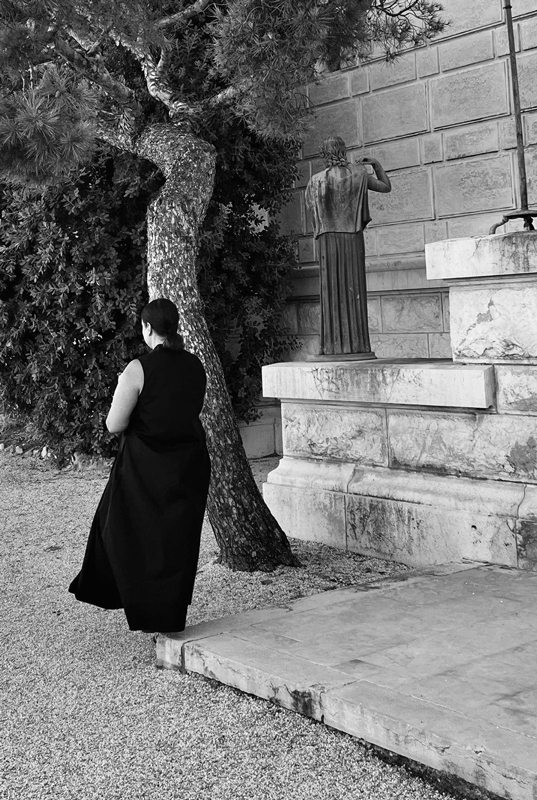
Waves of sorrow
Waves of sorrow, 2025
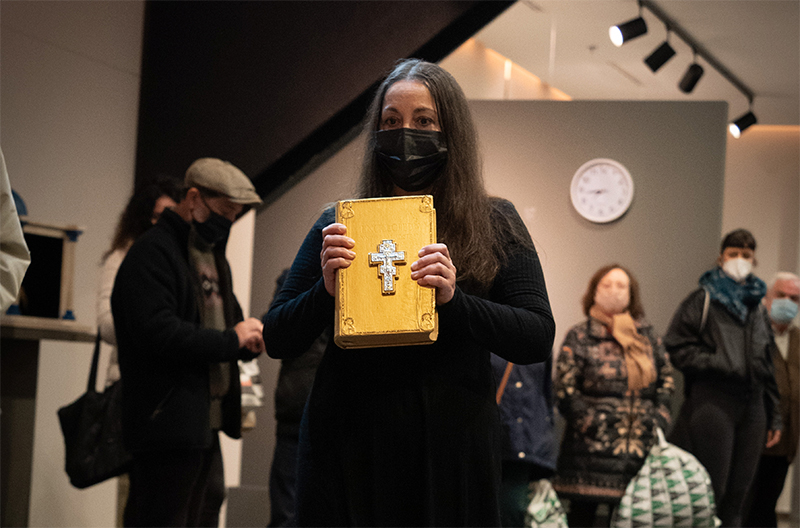
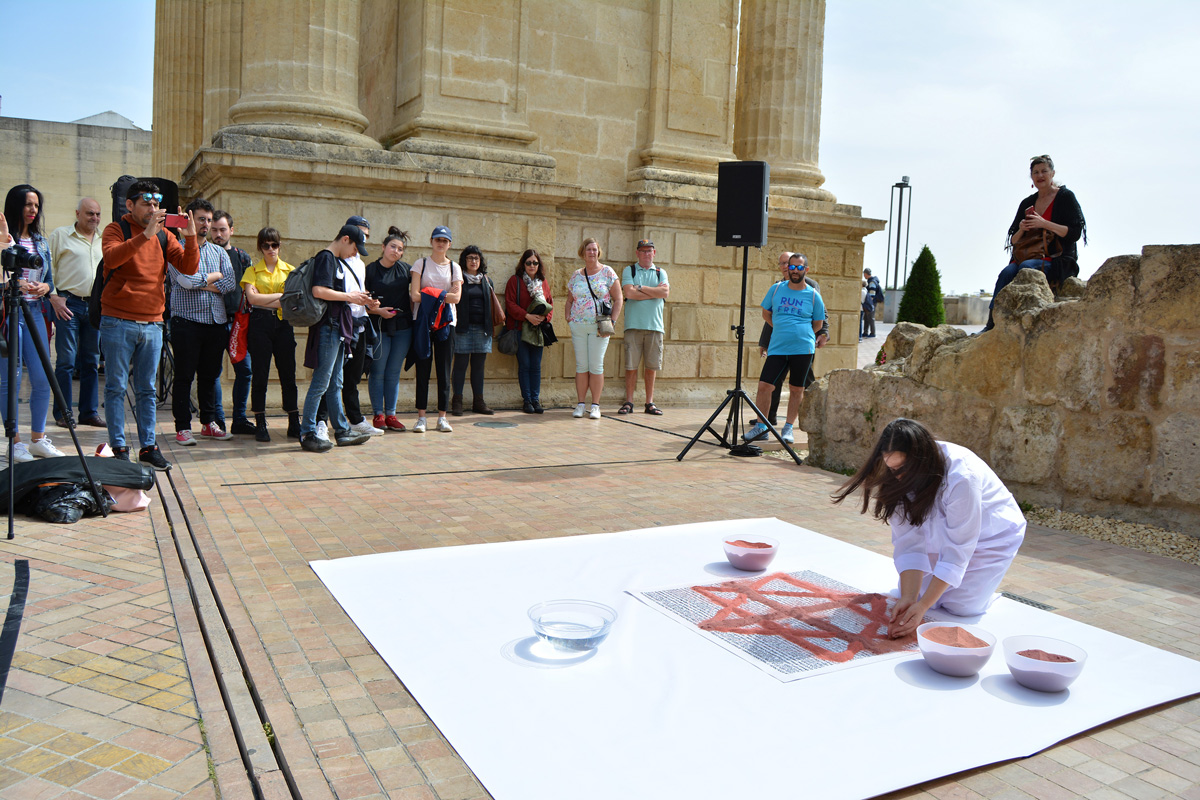
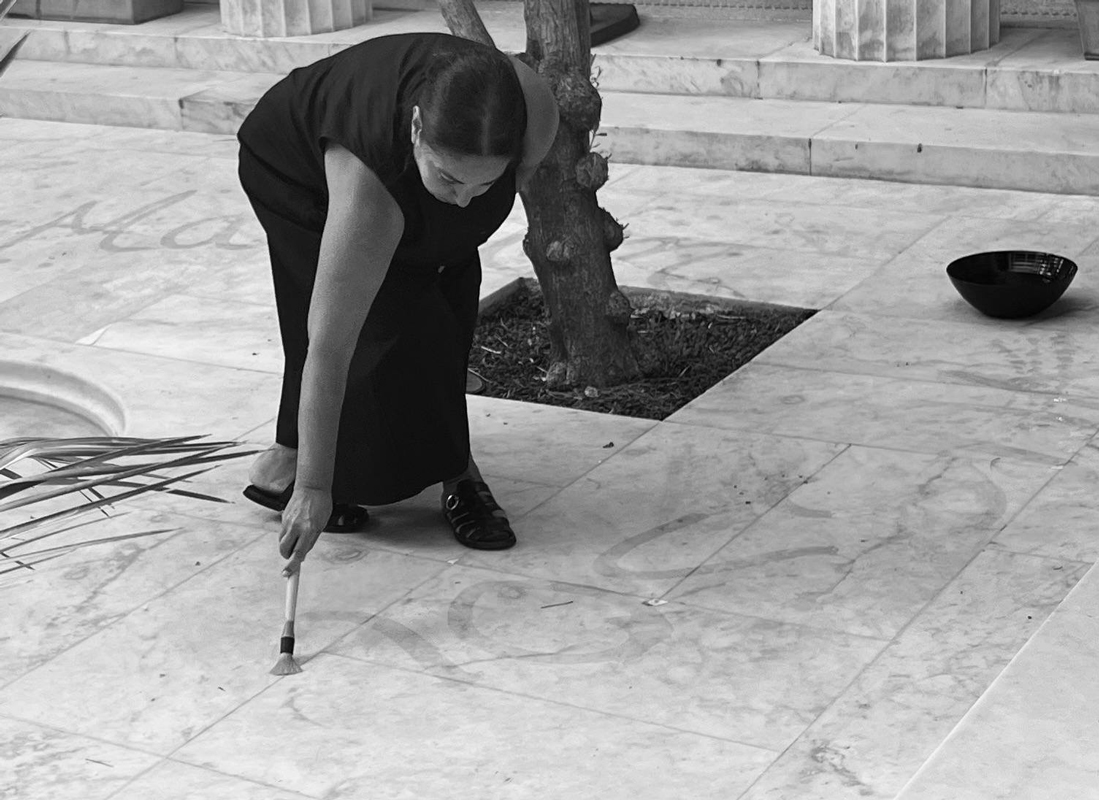
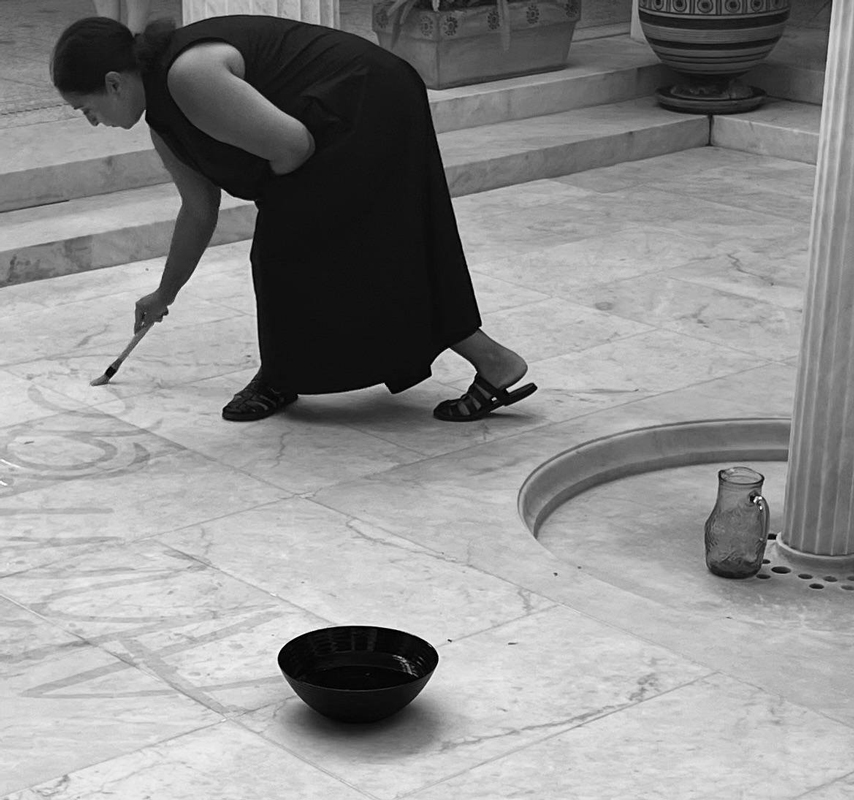
Performance, Villa Kérylos, Beaulieu-sur-mer, France
Video 5.58
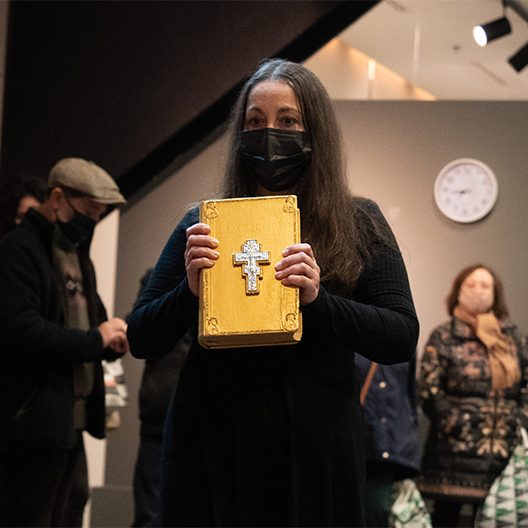
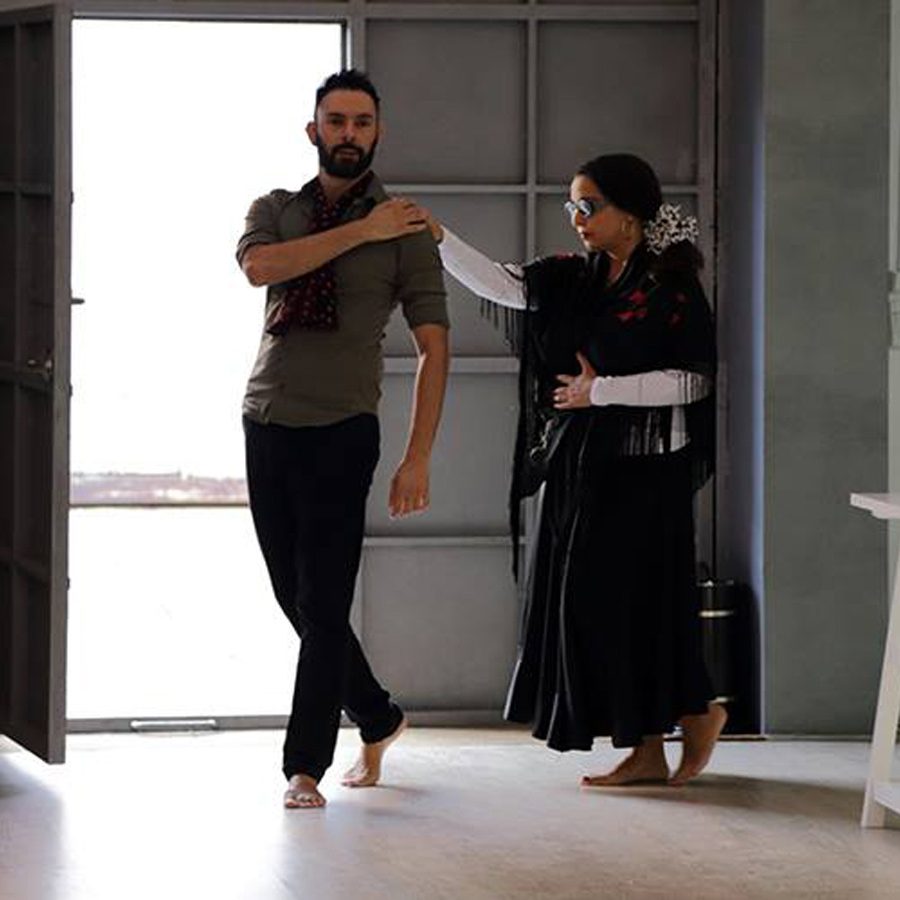
The sea conceals many things. Its deep sounds tell hidden stories, different from games and laughter. It is a solemn, silent sea, carrying songs for those we have lost. A silent threat, an uncertain horizon, it gathers the voices of vanished exiles. So its waves sound threatening, punctuating the absence and enveloping the air with lamentations. The performance becomes a ritual, a song of lamentation to remember those swallowed up by the waves.
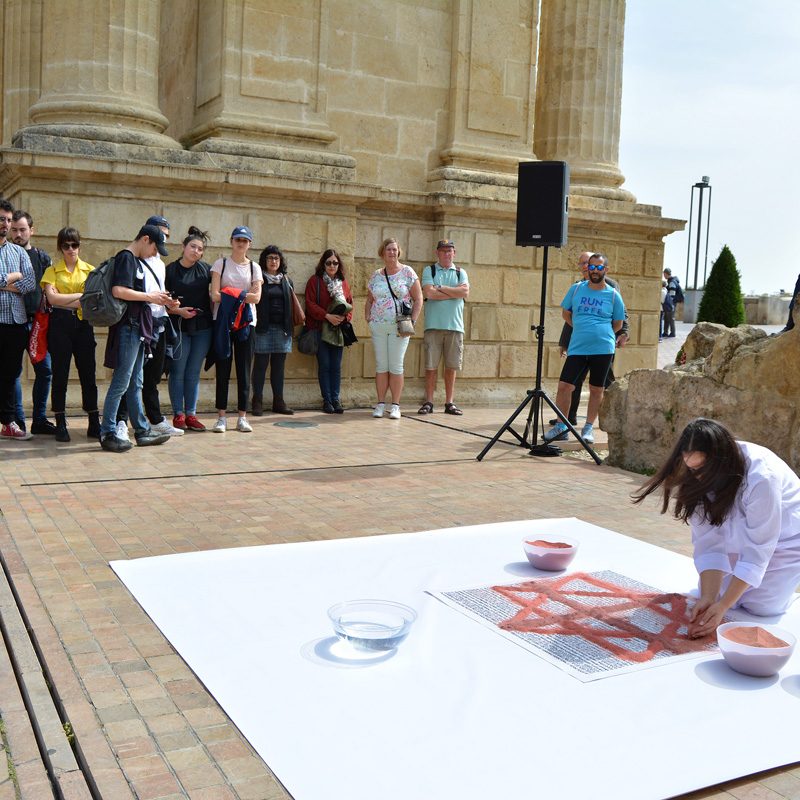
The story begins with a Palestinian lament, “Tallat El-Baroudeh,”, followed by “If I Must Die” by the Gazan poet Refaat Alareer. Arriving at the sea, as the storm breaks, the performer collects water. On her way back, she recalls the story of Dido and Aeneas, lovers separated by a sea, then listens inwardly to flutes from Cameroon. We then enter the second part of the performance, marked by three songs and two brief interludes: the lament of Epirus “Between Three Seas” (Ανάμεσα τρεις θάλασσες) – specially recorded for this performance – which mourns a man swept away by the waves; the chorus of the Medehates (Kabyle women singers of praise) invoking rain in this scorching spring season, mixed with a lament from Uganda; it finishes with Tanaweeh [لتناويح], a traditional Palestinian lament in which a mother bids farewell to her son who is going into exile. Inspired by these songs, the performer writes the names of the missing with seawater like traces of salty tears in letters that fade away like the traces of the deceased evaporating as they merge with the elements.
Sound edit Makis Solomos
Credits:
– “Tallat El-Baroudeh,” sung by Sanaa Moussa, album Ishraq Reminiscence, 2010
– Refaat Alareer, poem “If I must die,” recited in Arabic and English by Youssuf Moussa and Ilham Ibrahim;
– “When I am laid” (Dido’s lament from Purcell’s opera Dido and Aeneas), sung by Elin Manahan Thomas, Orchestra of the Age of Enlightenment, conducted by Harry Christophers;
– “Lela” flutes (Cameroon, 1909), recorded by Bernhard Ankermann, album Music! The Berlin Phogramm-Archiv (1900-2000), Wergo, 2000;
– “Ανάμεσα τρεις θάλασσες,” sung by the polyphonic group Pentatonon (Vangelis Kotsou, Nikos Menoudakis, Roula Rifouna, Argyro Karavinou; recording: Nikos Menoudakis, Varianta Sound Studios, Athens);
– Medehates choir, recorded by Sara Lehad;
– excerpt from the composition Immemorial Echoes by Sara Lehad;
– El-Funoun Palestinian Popular Dance Troupe;
– lamentation song (1969) from Uganda, recorded by David Fanshaw, album Spirit of African Sanctus, Saydisc, 1999;
Olas de tristeza
Villa Kérylos, Beaulieu-sur-mer, Francia 2025
El mar esconde muchas cosas. Sus profundos sonidos cuentan historias ocultas, diferentes de los juegos y las risas. Es un mar grave, silencioso, que lleva en sí cantos para aquellos y aquellas que hemos perdido. Amenaza silenciosa, horizonte incierto, recoge la voz de los exiliados desaparecidos. Entonces sus olas suenan amenazadoras, marcando el ritmo de la ausencia y envolviendo el aire de lamentos. La actuación se convierte en un ritual, un canto de lamentación para recordar a aquellos y aquellas que han sido engullidos por las olas.
La historia comienza con un Tanaweeh [لتناويح], un lamento tradicional palestino, y luego se escucha «Si debo morir» del poeta de Gaza Refaat Alareer. Al llegar al mar, mientras estalla la tormenta, la intérprete recoge agua. Al volver, recuerda la historia de Dido y Eneas, amantes separados por un mar, y luego escucha interiormente flautas de Camerún. Entramos entonces en la segunda parte de la performance, marcada por tres cantos y dos breves interludios: el lamento de Epiro «Entre tres mares» (Ανάμεσα τρεις θάλασσες), grabado especialmente para esta performance, que llora a un hombre arrastrado por las olas; el coro de las Medehates (mujeres cabilias cantantes de alabanzas) invocando la lluvia en esta temporada de primavera canicular, mezclado con un canto de lamentación de Uganda; una segunda lamentación palestina, «Tallat El-Baroudeh», en la que una madre se despide de su hijo que se va al exilio.
Inspirada por estos cantos, la artista escribe con agua de mar los nombres de los desaparecidos, en letras que se desvanecen como las huellas de los difuntos, evaporándose al fusionarse con los elementos.
Montaje sonoro Makis Solomos
Créditos:
– El-Funoun Palestinian Popular Dance Troupe;
– Refaat Alareer, poema «If I must die», recitado en árabe e inglés por Youssuf Moussa e Ilham Ibrahim;
– «When I am laid» (lamento de Dido de la ópera de Purcell, Dido y Eneas), cantado por Elin Manahan Thomas, Orchestra of the Age of Enlightenment, dirección Harry Christophers;
– «“Lela” flutes» (Camerún, 1909), grabado por Bernhard Ankermann, disco Music! The Berlin Phogramm-Archiv (1900-2000), Wergo, 2000;
– «Ανάμεσα τρεις θάλασσες», interpretada por el grupo polifónico Pentatonon (Vangelis Kotsou, Nikos Menoudakis, Roula Rifouna, Argyro Karavinou; grabación: Nikos Menoudakis, Varianta Sound Studios, Atenas);
– coro de los Medehates, grabado por Sara Lehad;
– Extracto de la composición Immemorial Echoes de Sara Lehad;
– Canto de lamentación (1969) de Uganda, grabado por David Fanshaw, disco Spirit of African Sanctus, Saydisc, 1999;
– «Tallat El-Baroudeh», interpretado por Sanaa Moussa, disco Ishraq Reminiscence, 2010.